
Cercle des Epigones
Who we are
Created on 30 March 2026, the Circle of the Epigones is a non-profit, non-partisan association governed by the French 1901 Law on Associations. It is dedicated to the protection, preservation, study, and promotion of the historical, cultural, and archaeological heritage of North Africa and the Middle East, across a geographical area extending from Morocco to Afghanistan. The association works in collaboration with local stakeholders, academic institutions, and public authorities.
In practical terms, the Circle of the Epigones organizes meetings, conferences, and public discussions to raise awareness among both the public and policymakers about endangered archaeological sites, the risks of looting, and the measures needed to protect threatened cultural heritage.
At a time when international disorder appears to be growing and tensions between states are increasing, we believe it is important to highlight what unites the peoples and nations of the Mediterranean basin and the Middle East.
The geographical area stretching from the Strait of Gibraltar—the “Pillars of Hercules” of antiquity—to the Euphrates in Mesopotamia (modern-day Syria and Iraq) corresponds to the borders of the Roman Empire at its height. Extending further east to the Hindu Kush mountains, Alexander the Great and Hellenistic civilization left their mark on ancient India (corresponding largely to present-day Pakistan), particularly through the Greco-Bactrian and later the Indo-Greek kingdoms. Subsequently, the Umayyad Caliphate, in a sense, carried this legacy forward by unifying North Africa and the Middle East before extending its influence into Europe through Al-Andalus.
This rich Islamic civilization, remarkable for its ethnic and cultural diversity, is sometimes relegated to the background in the historiography of European states, including in archaeological missions conducted in both the Maghreb and the Middle East. Finally, the Ottoman Empire served as a major political power that long connected the West and the Middle East, while also acting as a commercial crossroads linking Europe, Asia, and Africa.
History demonstrates that the West and the East have often been united within the same political entities or broader civilizations, bringing together peoples of diverse cultures and beliefs. At the very least, Europe and the East have, throughout history, maintained extensive commercial, human, cultural, religious, technological, and intellectual exchanges.
The word “Epigone” (from the Greek epigonos) means “descendant” or “heir.” The Circle of the Epigones sees itself precisely as the heir to a shared past that transcends continents. Its ambition is to bring cultures and peoples together around the values of humanism and universalism. Within its sphere of action, the Circle of the Epigones seeks to build bridges between the various international actors engaged in academic research in the fields of history and archaeology across North Africa and the Middle East.
Thomas Beaujeu
Partnerships
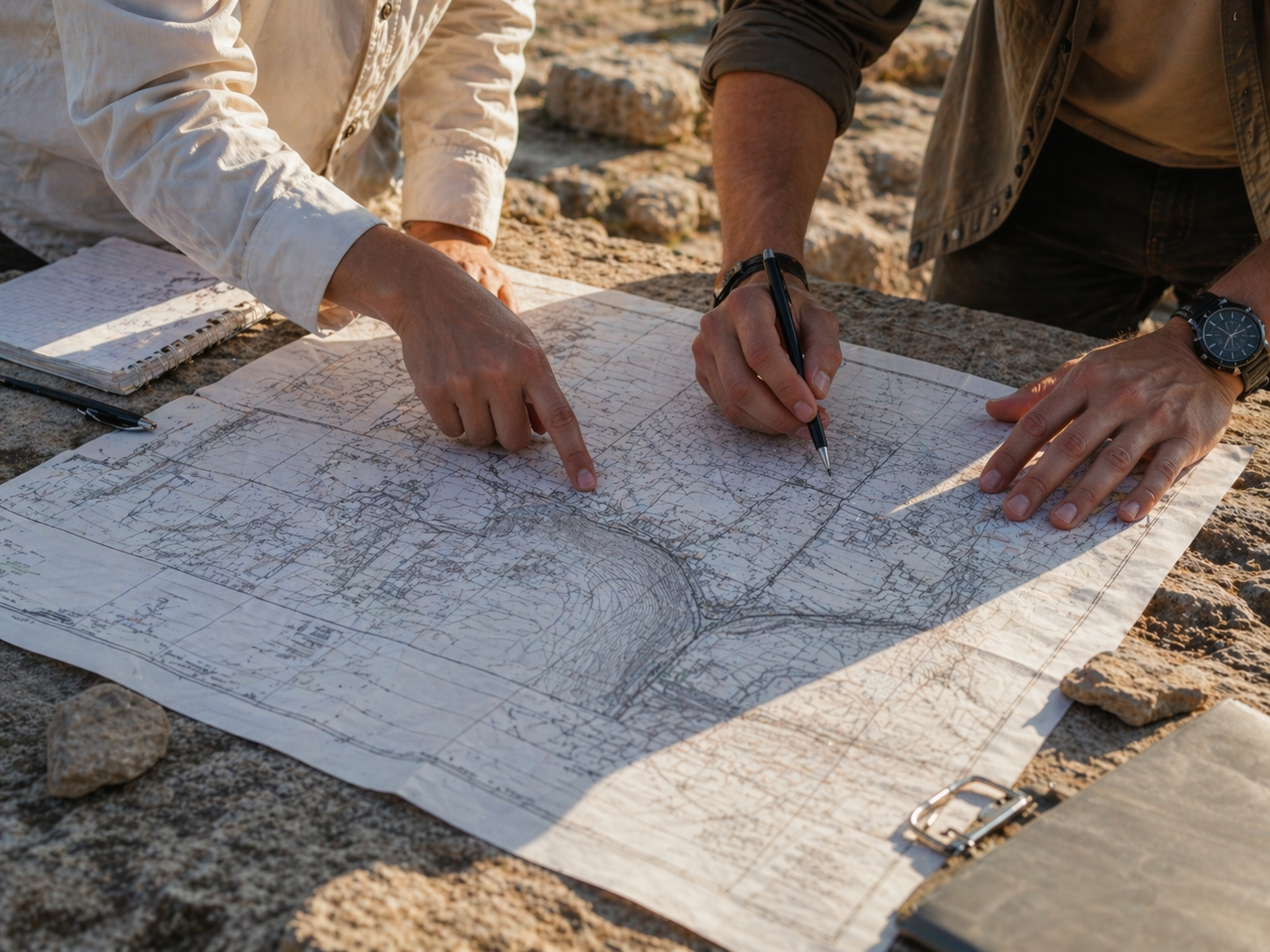
Our NGO is committed to developing long-term partnerships in regions endowed with exceptional historical and archaeological heritage. We work closely with research institutions conducting fieldwork across the Arab and Muslim world, from Morocco to Afghanistan. Committed to ensuring the long-term success of its projects, the association strives to build relationships with each of its partners based on trust, dialogue, and mutual respect.
Through its commitment, the association contributes to the preservation and promotion of this heritage for the benefit of local communities and future generations. It also fosters the exchange of expertise, the sharing of knowledge and skills, and the development of collaborative networks among the stakeholders involved. Through a cooperative and responsible approach, it supports initiatives that deliver tangible, lasting impact

